People Have Few Protections Against Law Enforcement Civil Asset Forfeiture Practices
Imagine a world where police officers regularly confiscate property from civilians, based only on officers’ accusations of criminal conduct. Imagine that these allegations are never examined by a judge and that charges of criminal conduct are often never even filed.
Unfortunately, you don’t have to imagine anything, because that is the world we live in.
This is the topsy-turvy world of civil seizure and forfeiture – where just the suspicion of criminal conduct by a law enforcement officer is enough for the seizure of property. Just an accusation can be sufficient proof to seize, for example, a car, a house, or a purse containing currency – and for the property’s eventual forfeiture to the government.
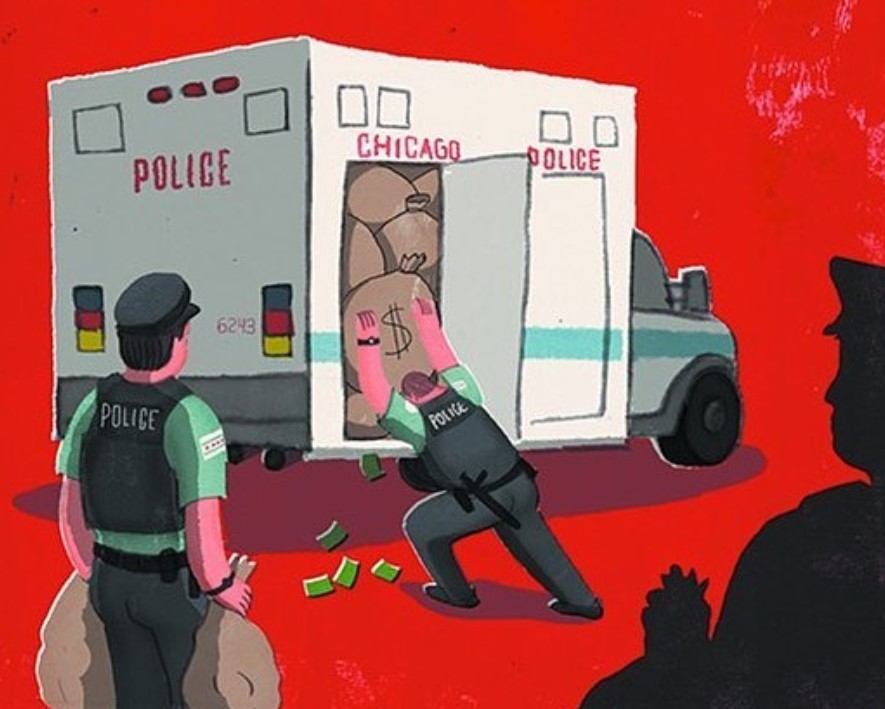
The scope of this confiscation has become so large that, in recent years, the value of the property seized just by the federal government outweighs the value of property stolen by burglars.
Protections against seizure and forfeiture are so fragile that they encourage law enforcement officers to treat every roadside encounter like an interaction with a career criminal. The law encourages the investigation, detention, and search of motorists for crimes that have nothing to do with automobile travel. The possession of cash, for instance, serves as sufficient evidence that the cash is related to crime and therefore justifies its confiscation.
Why are police are encouraged to pursue seizure and forfeiture of currency and other valuable goods? Because a big portion of that confiscated property gets funneled into law enforcement budgets. Street-level officers are praised by their commanding officers when they execute cash seizures. Predictably, this practice drives a wedge between law enforcement officers and honest, law-abiding citizens. Some motorists will start viewing officers as predators, while some law enforcement officers will start to see those whom they are sworn to protect and serve as prey.
Where are our public officials who are supposed to look out for justice? They must balance budgets and are constantly on the lookout for new sources of revenue. Law enforcement agencies can lighten their budget burdens by increasing the take from seizure and forfeiture. That makes policymakers resistant to good-government types who call for reforms to seizure and forfeiture – reforms that would squeeze the bottom lines of government budgets.
You might be interested in:
Buying and Selling Data Centers: A Legal Guide to Transactions | Securing the Edge: New Approaches to Data Center Cybersecurity | How to Avoid Civil Forfeiture? | Zero Trust Architectures: Data Center Security in a Post-Perimeter Era | 21 U.S.C. § 853. CRIMINAL FORFEITURES | What to Do If Your Bank Account Is Frozen by the DEA | After the Cops Seized Her Car, the Government Waited Five Years Before Giving Her a Chance To Get It Back | GDPR vs. CCPA: Comparing Data Center Obligations in Europe and California | Governor Hogan, Civil Asset Forfeiture Is Inherently Abusive | A Setback for Justice | Future of Data Center Architecture: Containerization, Serverless, and Beyond | Protecting Your Cash: A Guide to Airport Security with Rucci Law | How Police use Civil Asset Forfeiture to Legally Steal | Bad Rules Make Bad Cops: Bart Wilson on The Economics of Civil Forfeiture | Countering Civil Forfeiture Myths with Facts | Understanding Civil Asset Forfeiture in California | When Innocence Does Not Help: How to Communicate about Civil Asset Forfeiture | Navigating Civil Asset Forfeiture (The Court Process) | How Much Has the IRS Seized w/Civil Asset Forfeiture? | Controversial civil forfeiture program back in action | Streamlining the Permitting Process for Data Center Development | Cross-Border Data Transfers: Legal Compliance for Global Data Flow | Civil asset forfeiture reform is sweeping the nation | Ensuring Environmental Compliance in Data Center Construction
You might be interested in:
Drug Money Seizure California – Rucci Law | Cops Seized $8,000 From Her and Never Charged Her With a Crime | Criminal Forfeiture Defense Strategies | How to Demand the Return of Seized Property | Robert Durst to Cops: I Want the $161,000 You Seized | Arizona Legislature Passes Bill Requiring Convictions for Asset Forfeiture | AOC Discovers the Horrors of Civil Asset Forfeiture, Rails Against the Practice in Congressional Hearing | Final Administrative Action by Customs and Border Protection | Professional Supreme Court Forfeiture Rulings Legal Services | Civil Forfeiture (Shorter Version) | Professional Lease Agreement Attorney Legal Services | Since 2007, the DEA has taken $3.2 billion in cash from people not charged with a crime | Asset Forfeiture Terrorism Seizures | How to Challenge an Airport Cash Seizure Successfully | Civil Asset Forfeiture Used as Leverage by State | Can You Recover Seized Bitcoin or NFTs? | Fortune or forfeiture: real estate lending in the cannabis space | Five Myths of Civil Forfeiture | Airbnb ‘tenant from hell’ who squatted for 500 days and wouldn’t leave unless owner payed $100,000 moves out | Civil Asset Forfeiture, Blacks Law Definitions and the Native Truth | Rep. Travis Grantham Explains HB2810 to Reform Civil Asset Forfeiture (2-17-21) | As Civil Forfeiture Faces Statewide Reform, Some Departments Are Making Changes Now | Civil Asset Forfeiture | US Government is Seizing so Many Cryptos, It’s Enrolling Private Contractors