Yes, police in most states can seize your money even if you’re not charged with a crime
Through a process called civil forfeiture, the government can seize your money if they believe it is linked to a crime.
Some Google search ads can be used by scammers to redirect to scam sites
No, the federal minimum wage is not scheduled to increase in 2024
Author: Nate Hanson, Brandon Lewis
Published: 8:34 PM EST December 8, 2021
Updated: 5:32 PM EST December 9, 2021
Facebook
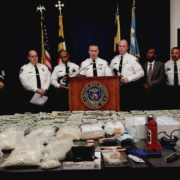
On Dec. 7, 2021, a Dallas, Texas, television station published a story about a K-9 officer that helped police seize a bag with more than $100,000 at the Love Field Airport. The station’s tweet about the story was shared more than 5,000 times and led to some people questioning why the money was seized.
Readers noted that the story pointed out the person who owned the bag was not arrested. One person responded, “Is it illegal to have money?” Another person, whose response was retweeted more than 6,000 times, said that police can seize people’s money even if they are not charged with a crime.
THE QUESTION
Can police in most states seize your money even if you’re not charged with a crime?
THE SOURCES
Laws from Maine, Nebraska, New Mexico and North Carolina
U.S. Department of Justice
Institute for Justice
Texas Appleseed
THE ANSWER
This is true.
Yes, police in most states can seize your money even if you’re not charged with a crime.
Through a process called civil forfeiture, the government can seize your money if they believe it is linked with a crime. To get the money back, owners often must show they are unaware of the illegal conduct or did all they could to stop the illegal activity.
WHAT WE FOUND
The practice of seizing and keeping property suspected of being used in criminal activity is known as asset forfeiture
“Asset forfeiture is designed to deprive criminals of the proceeds of their crimes, to break the financial backbone of organized criminal syndicates and drug cartels, and to recover property that may be used to compensate victims and deter crime,” the U.S. Department of Justice (DOJ) says.
There are three types of asset forfeiture: criminal, civil and administrative. The story about more than $100,000 being seized at a Dallas airport is an example of the civil forfeiture process, which is what we’ll focus on.
Most states and the federal government have civil forfeiture laws.
In a civil forfeiture case, the government brings action against the property, meaning the defendant in the case is the property itself and criminal charges don’t have to be filed against the owner, according to the DOJ. If challenged, the government, as a basis for forfeiture, must then show in court that there is a connection between the property and illegal activity. To get their property back, owners often must show they were unaware of the illegal conduct or did all they could to stop the illegal activity.
The government says civil forfeiture helps impede criminal activity. Critics argue civil forfeiture limits the due process rights of property owners because they don’t have to be involved in a crime to lose their property.
The Institute for Justice, a nonprofit that advocates for the end of civil forfeiture, says four states have abolished civil forfeiture and use criminal law to forfeit property. Those states are North Carolina, New Mexico, Nebraska and Maine.
Several other states require a criminal conviction before beginning civil forfeiture proceedings, but Texas, where the seizure of more than $100,000 took place, does not.
Dallas police claimed in a report that the money seized at the airport was part of a drug trafficking investigation, even though the traveler wasn’t arrested.
While there is a process in Texas to get the money back, Texas Appleseed, which works on criminal justice reform, says defenses are usually expensive and a majority of cases go uncontested.
States can also work with the federal government on civil forfeiture cases through a federal program called equitable sharing. The partnership allows local and state law enforcement agencies to transfer seized property to the federal government for federal forfeiture. The state or local agency could then get some of the net proceeds of the forfeiture.
The DOJ says the program provides additional resources and strengthens cooperation between federal, state and local law enforcement agencies. Opponents argue equitable sharing gives law enforcement a financial stake in seizures.
The type of seized assets that can be transferred to the federal government is dependent on state law. The Institute for Justice says eight states and the District of Columbia have passed laws to limit equitable sharing. For example, Maine only allows equitable sharing in cases when more than $100,000 in cash is seized.
Additional Reading:
Watch Cops Seize Combat Vet’s Life Savings [RARE FOOTAGE] | Data Center Taxonomy & Classification: Harmonizing Industry Standards | U.S. Marshals Service hires custodian to hold crypto seized in criminal activity | Walberg Introduces the Civil Asset Forfeiture Reform Act | The Importance of Documentation in Forfeiture Cases | Resilience and Security: Protecting Data Centers as Critical Infrastructure | What Judges Look for in Civil Forfeiture Hearings | Forfeited profits: Why the feds chronically undersell seized property | NPR Articles on Dirty Money Asset Seizures and Forfeitures | Mergers & Acquisitions in Data Centers: Legal Due Diligence & Deal Structuring | Data Centers and the Law: A Comprehensive Overview | MI Prosecutor Quits Over Forfeiture Fund Charges | The feds are helping local police make money by taking your stuff again | Streamlining the Permitting Process for Data Center Development | Data Center Leasing & Co-location Agreements: Legal Nuances for Space & Services | How Property Owners Can Prove Innocence in Court | What Happens If You Miss a Forfeiture Deadline? | When Innocence Does Not Help: How to Communicate about Civil Asset Forfeiture | Optimizing Your Data Center Investment: Strategies for Success | The Role of Deadlines in Asset Forfeiture Cases | Outsourcing vs. In-House: Legal Factors for Data Center Operations | How to Avoid Asset Forfeiture in Oklahoma | Tennessee Corruption Case Raises Questions about Forfeiture and Police Office Culture | “They’re Taking My Stuff!” – Now on Video!
Additional Reading:
Professional Interstate Legal Practice Legal Services | Since 2007, the DEA has taken $3.2 billion in cash from people not charged with a crime | Justice Thomas Defends Victims of Policing for Profit | Dallas Police Took $106,000 From a Traveler. They Haven’t Explained Why. | Forfeiture for Money Transmitting Business | Oregon Seizes $121,000 of Deceased Veteran’s Benefits | DEA Asset Forfeiture Defense Strategies | Civil Forfeiture: Can the Government Really Seize and Take Ownership of My Company’s Assets? | Civil Asset Forfeiture Used as Leverage by State | America’s Asset-Forfeiture Scam Is Law Enforcement’s Disgrace | Asset Seizure Due Process Rights – Rucci Law | Drug-Related Asset Forfeiture Defense Strategies | Cash Forfeiture Attorney Los Angeles – Rucci Law | The Future of Asset Forfeiture Laws in California: Protecting Your Rights | Common Mistakes Victims Make in Asset Forfeiture Cases | Cash Seizure Defense – Rucci Law | Asset Forfeiture & Bankruptcy Legal Resources | Asset Forfeiture Legal Resources | Ducey signs bill requiring conviction before assets are seized | Asset Seizure Laws – Rucci Law | A dysfunctional civil-forfeiture system seizes savings, destroys lives | Civil asset forfeiture is a dangerous tool | JUSTICE MANUAL 9-117.000 – Department Of Justice Assets Forfeiture Fund | John Oliver Civil Asset Forfeiture Clip 2